O'Dowd Politics
A call for pragmatism in politics.

Archive for the month “November, 2012”

Should the Republican Party platform be modified to cater to women’s reproductive rights?
I have written several scathing posts about my own Republican Party and now, to be fair and balanced, I will consider our donkey friends, the Democrats. (I mean no disrespect by the label, just trying to gain readership from those who enjoy creative literary execution.) Gallup reports that women are more likely to be Democrats than Republicans (Gallup Article). It also known that 55% of women voters turned out for President Obama in the last election, a critical component of his victory (Huffington Post Article). The same Huffington Post article cites quotes from illustrious and revered advocates for the somewhat misunderstood female species, stating that they voted for the Democrat because of the following:“Romney seemed to struggle to connect with women as a result of the GOP’s escalating efforts to limit women’s reproductive rights and a series of controversial comments from Republicans about rape, birth control and abortion.”
Intriguing. Apparently following politics for several hours a day is insufficient to pick up on the nuances of the backward chauvinist pig that we selected as our candidate for president. (Please note the sarcasm. Get used to it.) I must have been asleep when NPR ran their story on how Romney refused to hire women when he was Governor and made comments about them belonging barefoot and pregnant in the kitchen. Oh wait, I wasn’t asleep; he never said anything that was the slightest bit offensive to the 99.9% of reasonable women that live in this country. Binders full of women? Awkward perhaps but he was trying to describe how conscientious he had been to ensure that women were fairly represented in his cabinet. Anyone who made anything else of it needs to be institutionalized until they can get over their mania. Romney was reasonable, balanced, and fair in his articulation and I believe in his heart he is a decent and equitable guy. The gender gap in this last election wasn’t his fault nor can it be blamed entirely on two other Republican candidates who said some pretty ignorant things that clearly weren’t representative of the party.
So why the gap? Why does Gallup report that 41% of women are Democrats while only 25% are Republicans? The answer is easy: clever marketing and pandering. Plain and simple. Sure, a fair number of women will never be Republican nor vote for the party because their views on moral issues, limited government, and the sanctity of life are clearly incompatible with our party. In a similar vein, 100% of alcoholics opposed prohibition—everybody will not agree on everything. You might wonder then, is the nebulous issue “reproductive rights” responsible for the gap in female membership in the Republican Party? I suspect that it is a large factor and one that is completely unavoidable.
I realize that this blog has been harping for pragmatism and reason in politics—and it will continue to do so. I will not avoid tackling the hard issues, however, so get ready for a duzy of a rant: Republicans are losing some women voters because they choose to live promiscuous lives, mothering children they don’t want and refusing to accept responsibility for their actions. Sure, the guy deserves equal blame and should share an equal burden but consider how unfair it is that both the man and woman, in most cases (rape excluded) make the choice to parent a child but the woman has the only say in whether the baby lives. Fair? No. Were the reproductive rights of the woman violated when she conceived the baby? No. Were the man’s rights violated in the act? No. How about when the time came for the abortion and the woman exercised her “right to choose” dispatching the baby decisively 18 weeks after its life began? It had a little heart working, it had mother’s chin and father’s brow but without even consulting the dad she walked into a clinic and had the insidious tumor removed from her stomach before it could become the policeman or doctor or lawyer—or construction worker at minimum wage. Before it could achieve and love and fail and suffer and cry and laugh—and live. In this example were the woman’s reproductive rights trampled? No, she in her selfish narcissism, decided that the world should be deprived of the child—not to mention her partner who had no say in the matter. It was his rights that were ignored. But nobody speaks for him.
Yes, Republicans are saddened about the loss of innocent lives due to the crime of abortion. Yes, I said crime. As of the latest figures (http://www.whyprolife.com/abortion-facts) in 2005, 1.2 million babies were killed in the U.S. and since 1973 when abortion was legalized; over 50 million children have been aborted. That’s about the same as the total number of deaths attributed to World War II. That Great War that spread death and destruction around the globe killed the same amount of lives that have been electively destroyed over the last 39 years—an absolute travesty; and one that we will pay for someday when a moral, just, and righteous leadership controls this country.
So do women choose to be a Democrat due to reproductive rights? Some do, sure, but I contend that it is a very narrow and short-sighted decision; even if the Daily Beast is right that 40% of women have had abortions. (Daily Beast Article, I question this science however, as it assumes that every abortion is from a different woman. We know that many promiscuous ladies often have multiple abortions, some as many as eight in their lifetime.) So you ask, does the Republican Party need to develop a platform that caters to this “right to choose” myth? No. Should our party run to decriminalize murder? Not a chance. We are the party that stands for equity, life, and freedom. Stand for reproductive inequity and infanticide? Never. Not if we win nary another election.
O’Dowd

Thoughts on the Republican Party
Today I was listening to NPR on the way to work. I know, I’m not supposed to tune in to tainted liberal news sources but what can I say? I happen to like the wide variety of content that is featured on their programs and with my keen senses and discernment, I think I am capable of protecting my conservative values from impairment. Regardless, as I listened there was a story about how the Republican Governors Association is meeting in Las Vegas. Apparently they have had a number of forums discussing the health of the party to see if any deductions can be made for the loss in 2012. NPR reported that there was much optimism and that many of the representatives were convinced that the lack of enthusiasm for Republicans is simply due to the tone of the party. “Tone?” you ask with incredulity. I share your skepticism.
Here’s the issue; Republicans have given the Democrats the following issues to control: Women’s rights, the environment, healthcare, immigration reform, welfare, food stamps, economic reform, love and kindness. Republicans with their generosity have allowed themselves to be portrayed as protecting the following issues: the rights of white people, the rights of rich people, moral issues, and big business. Granted, this is a narrow view of the issue and perhaps I will have the opportunity in the future to elaborate, but many Americans have this view of the party ideology.
My solution is simple: Republicans need to be outspoken on every issue. I don’t believe they should sacrifice our values, I think they need to better articulate how a conservative view does have solutions to every problem. Healthcare? Provide a clear, concise plan for how every American can become covered under a conservative healthcare system. The environment? Demonstrate how conservation of our resources is critical for the sustainability of the earth. Crack down on industries and impacts that are not achieving an appropriate balance of impacts and benefits. Women’s rights? Reveal to women across this great country that their lives are about more than birth control and abortion and demonstrate a true heart-felt concern for their well-being. Welfare and social programs? Show the poor and downtrodden that this great America provides incredible opportunity and provide a “hand-up” process whereby generous assistance is provided if appropriate efforts are being made to better themselves.
I could go on all day. Each one of these needs significant thought and careful articulation but the answer is not simply in tone. Tone=pandering. Americans want answers. My solution to this electoral crisis? The Republican Party can remain silent on no issues for the Democrats to monopolize. We must provide real solutions the problems that plague our nation. I mean real solutions. Yes, I know it’s a breathtaking idea and perhaps in fifty years we will look in the Yale Book of Quotations and find the following entry:
“My solution to this electoral crisis? The Republican Party can remain silent on no issues for the Democrats to monopolize. We must provide real solutions the problems that plague our nation.” ~O’Dowd, November 15, 2012
Just remember you read it here first.
Give me a comment or a like people!
O’Dowd

100 Years Ago a Bullet Saved the Republican Party
If you follow politics closely, you are aware of the controversy surrounding the current party platform and the dissension in the Republican ranks. Some are contending that the GOP needs to become more inclusive and appeal to minority voters and women while others assert that the party needs to stand strong on the principles of constitutional constructionism, individual responsibility and a smaller centralized government. Disputing over party policy is very normal after losing a major election; most recently we saw a major shift in the Democratic Party where in 2004 John Kerry ran on a platform to vacate the war in Iraq. Upon losing the election, the party became much more moderate and in 2008, Barack Obama demonstrated a very different tone in his views on the subject. Similarly, in 2008 there was much concern about John McCain being too moderate in his views and not attacking the liberal ideas of his Democratic challenger. From that point forward the Tea Party movement became instrumental in redefining the conservative ideal as they swept the mid-term election of 2010, in part as a referendum on the moderate shift in the party.
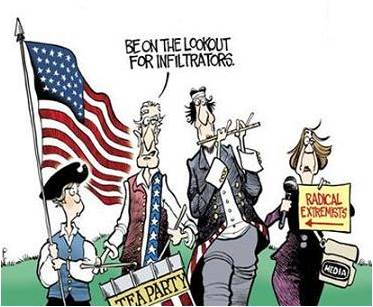
While such wranglings are typical and expected after election loses, the major concern of party leaders is to retain the allegiance of the public and major political personalities. As much as we don’t like it, there is a split in the Republican Party that must be resolved if the GOP is ever to regain control of the White House. Over the past week we have heard a number of commentators including Rush Limbaugh ask why 3 million members of the Republican Party stayed home on election day and many believe it was a due to a disillusionment of the prospects of a Romney presidency which, depending on their position, was either too liberal or too conservative for their tastes. While most of us look at this protest position as unhelpful if not masochistic, the disenfranchisement of Republican voters must be evaluated to avoid a split in the party.
Let’s look back 100 years at another scenario that shows striking parallels to our current situation. In 1912, three years after leaving the presidency as a Republican, Teddy Roosevelt, disenfranchised with the Republican Party, formed the Progressive Party and ran for president. The basis for this division should sound familiar: business vs. regulation, women’s rights vs. status quo, conservation vs. exploitation, and reform in election financing. (I’ll allow you a few seconds to recover your jaw from its current resting place on your keyboard. For more information on the Progressive Party platform please visit Wikipedia Entry). Truth be told, Roosevelt tried to gain the Republican nomination but was outmaneuvered by William Howard Taft and although Roosevelt outpolled Taft in the primaries, the convention was controlled by his opponent resulting in Taft winning the nomination in June. In anger, Roosevelt and a number of other “progressives” formed the new Progressive Party and Roosevelt was named as their candidate in August.
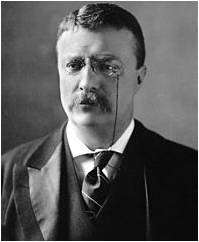
The Republican Party was firmly entrenched however, and the Democrats had a good candidate in Woodrow Wilson. It would be a difficult effort, requiring significant time and energy from the Progressive party, and an energetic, healthy, and articulate figurehead to win the election. Roosevelt fit the bill, gaining a significant advantage over his Republican rival and showing increased momentum going into the month before the election. It appeared that the Republican Party was doomed as their candidate fell further and further in the polls. Roosevelt was gaining but Wilson seemed to be benefiting most from the split in the party. Then the unthinkable happened. On October 14, just three weeks before the election, John Flemmang Schrank, a psychotic saloon keeper, on advice from the ghost of William McKinley (I’m not making this up), shot president Roosevelt in the chest from point-blank range at a campaign stop in Milwaukee. He had been aiming at the president’s head but his shot was deflected by a bystander who was trying to save the candidate’s life. Although he was wounded, Roosevelt still gave his speech, which was largely responsible for his survival, as the 50 page manuscript and his spectacle case absorbed much of the momentum of the bullet. (The projectile remained embedded his chest for the rest of his life. Read the speech here and you will find shocking similarities to our current situation.)

Roosevelt spent much of the next few weeks in the hospital recovering from the wound. His absence from the campaign trail was partly to blame for his eventual loss in the election. When the votes were tallied, Roosevelt had 27% percent of the vote, Wilson 42%, Taft 23%, and 6% to Socialist Party Eugene Debs. The Republican Party was divided and for the first time since the foundation of the modern two party system, a third party candidate outpolled an established party in a presidential election.
While it is hard to see back through the prism of history and consider “what if” scenarios, we know that the Progressive party, though it had some success in the 1914 and 1916 election, eventually sputtered out and many of the Progressives rejoined the Republican Party or became connected with the “New Deal” Democratic Party in the 1930’s. But what if Roosevelt had not been shot and had been able to campaign throughout the battleground states to become president? Would that have spelled the end of the Republican Party? We will never know for sure, but let us consider these actions of 100 years ago as a lesson to all of us Republicans that party bickering and division will not strengthen our position in the world. We must remain strong to our principles of liberty and freedom but there is a time and place for compromise and adjustment to make us better connected with the American public. 100 years ago a bullet saved the Republican Party. Next time we might not be so lucky.
O’Dowd
“It could be worse” is just as good a reason to vote for Obama as any, right?
The only problem is that it’s not better…but it could be worse right?
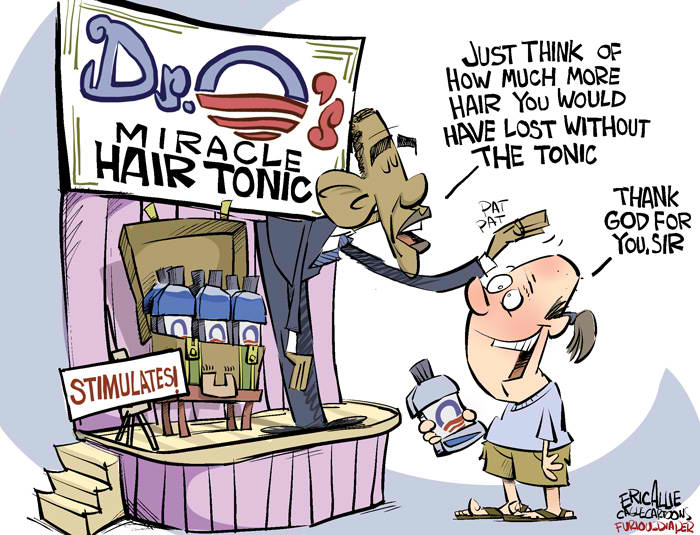
Are you still concerned about money in politics?
Over the past year I’ve seen many well funded candidates go up in flames leading me to question how much money can actually influence an election. Thoughts? ~ O’Dowd
 O'Dowd Politics