O'Dowd Politics
A call for pragmatism in politics.

Archive for the category “Politics”
Thoughts on the Republican Party
Today I was listening to NPR on the way to work. I know, I’m not supposed to tune in to tainted liberal news sources but what can I say? I happen to like the wide variety of content that is featured on their programs and with my keen senses and discernment, I think I am capable of protecting my conservative values from impairment. Regardless, as I listened there was a story about how the Republican Governors Association is meeting in Las Vegas. Apparently they have had a number of forums discussing the health of the party to see if any deductions can be made for the loss in 2012. NPR reported that there was much optimism and that many of the representatives were convinced that the lack of enthusiasm for Republicans is simply due to the tone of the party. “Tone?” you ask with incredulity. I share your skepticism.
Here’s the issue; Republicans have given the Democrats the following issues to control: Women’s rights, the environment, healthcare, immigration reform, welfare, food stamps, economic reform, love and kindness. Republicans with their generosity have allowed themselves to be portrayed as protecting the following issues: the rights of white people, the rights of rich people, moral issues, and big business. Granted, this is a narrow view of the issue and perhaps I will have the opportunity in the future to elaborate, but many Americans have this view of the party ideology.
My solution is simple: Republicans need to be outspoken on every issue. I don’t believe they should sacrifice our values, I think they need to better articulate how a conservative view does have solutions to every problem. Healthcare? Provide a clear, concise plan for how every American can become covered under a conservative healthcare system. The environment? Demonstrate how conservation of our resources is critical for the sustainability of the earth. Crack down on industries and impacts that are not achieving an appropriate balance of impacts and benefits. Women’s rights? Reveal to women across this great country that their lives are about more than birth control and abortion and demonstrate a true heart-felt concern for their well-being. Welfare and social programs? Show the poor and downtrodden that this great America provides incredible opportunity and provide a “hand-up” process whereby generous assistance is provided if appropriate efforts are being made to better themselves.
I could go on all day. Each one of these needs significant thought and careful articulation but the answer is not simply in tone. Tone=pandering. Americans want answers. My solution to this electoral crisis? The Republican Party can remain silent on no issues for the Democrats to monopolize. We must provide real solutions the problems that plague our nation. I mean real solutions. Yes, I know it’s a breathtaking idea and perhaps in fifty years we will look in the Yale Book of Quotations and find the following entry:
“My solution to this electoral crisis? The Republican Party can remain silent on no issues for the Democrats to monopolize. We must provide real solutions the problems that plague our nation.” ~O’Dowd, November 15, 2012
Just remember you read it here first.
Give me a comment or a like people!
O’Dowd
100 Years Ago a Bullet Saved the Republican Party
If you follow politics closely, you are aware of the controversy surrounding the current party platform and the dissension in the Republican ranks. Some are contending that the GOP needs to become more inclusive and appeal to minority voters and women while others assert that the party needs to stand strong on the principles of constitutional constructionism, individual responsibility and a smaller centralized government. Disputing over party policy is very normal after losing a major election; most recently we saw a major shift in the Democratic Party where in 2004 John Kerry ran on a platform to vacate the war in Iraq. Upon losing the election, the party became much more moderate and in 2008, Barack Obama demonstrated a very different tone in his views on the subject. Similarly, in 2008 there was much concern about John McCain being too moderate in his views and not attacking the liberal ideas of his Democratic challenger. From that point forward the Tea Party movement became instrumental in redefining the conservative ideal as they swept the mid-term election of 2010, in part as a referendum on the moderate shift in the party.
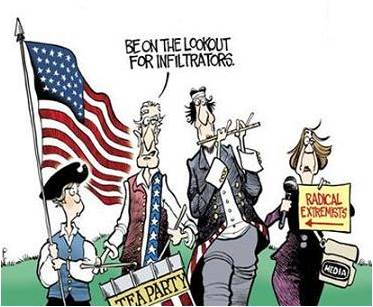
While such wranglings are typical and expected after election loses, the major concern of party leaders is to retain the allegiance of the public and major political personalities. As much as we don’t like it, there is a split in the Republican Party that must be resolved if the GOP is ever to regain control of the White House. Over the past week we have heard a number of commentators including Rush Limbaugh ask why 3 million members of the Republican Party stayed home on election day and many believe it was a due to a disillusionment of the prospects of a Romney presidency which, depending on their position, was either too liberal or too conservative for their tastes. While most of us look at this protest position as unhelpful if not masochistic, the disenfranchisement of Republican voters must be evaluated to avoid a split in the party.
Let’s look back 100 years at another scenario that shows striking parallels to our current situation. In 1912, three years after leaving the presidency as a Republican, Teddy Roosevelt, disenfranchised with the Republican Party, formed the Progressive Party and ran for president. The basis for this division should sound familiar: business vs. regulation, women’s rights vs. status quo, conservation vs. exploitation, and reform in election financing. (I’ll allow you a few seconds to recover your jaw from its current resting place on your keyboard. For more information on the Progressive Party platform please visit Wikipedia Entry). Truth be told, Roosevelt tried to gain the Republican nomination but was outmaneuvered by William Howard Taft and although Roosevelt outpolled Taft in the primaries, the convention was controlled by his opponent resulting in Taft winning the nomination in June. In anger, Roosevelt and a number of other “progressives” formed the new Progressive Party and Roosevelt was named as their candidate in August.
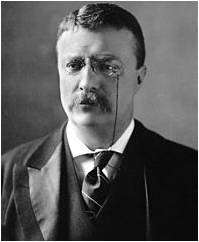
The Republican Party was firmly entrenched however, and the Democrats had a good candidate in Woodrow Wilson. It would be a difficult effort, requiring significant time and energy from the Progressive party, and an energetic, healthy, and articulate figurehead to win the election. Roosevelt fit the bill, gaining a significant advantage over his Republican rival and showing increased momentum going into the month before the election. It appeared that the Republican Party was doomed as their candidate fell further and further in the polls. Roosevelt was gaining but Wilson seemed to be benefiting most from the split in the party. Then the unthinkable happened. On October 14, just three weeks before the election, John Flemmang Schrank, a psychotic saloon keeper, on advice from the ghost of William McKinley (I’m not making this up), shot president Roosevelt in the chest from point-blank range at a campaign stop in Milwaukee. He had been aiming at the president’s head but his shot was deflected by a bystander who was trying to save the candidate’s life. Although he was wounded, Roosevelt still gave his speech, which was largely responsible for his survival, as the 50 page manuscript and his spectacle case absorbed much of the momentum of the bullet. (The projectile remained embedded his chest for the rest of his life. Read the speech here and you will find shocking similarities to our current situation.)
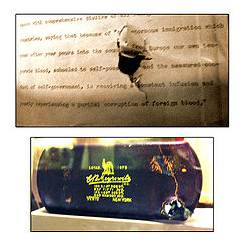
Roosevelt spent much of the next few weeks in the hospital recovering from the wound. His absence from the campaign trail was partly to blame for his eventual loss in the election. When the votes were tallied, Roosevelt had 27% percent of the vote, Wilson 42%, Taft 23%, and 6% to Socialist Party Eugene Debs. The Republican Party was divided and for the first time since the foundation of the modern two party system, a third party candidate outpolled an established party in a presidential election.
While it is hard to see back through the prism of history and consider “what if” scenarios, we know that the Progressive party, though it had some success in the 1914 and 1916 election, eventually sputtered out and many of the Progressives rejoined the Republican Party or became connected with the “New Deal” Democratic Party in the 1930’s. But what if Roosevelt had not been shot and had been able to campaign throughout the battleground states to become president? Would that have spelled the end of the Republican Party? We will never know for sure, but let us consider these actions of 100 years ago as a lesson to all of us Republicans that party bickering and division will not strengthen our position in the world. We must remain strong to our principles of liberty and freedom but there is a time and place for compromise and adjustment to make us better connected with the American public. 100 years ago a bullet saved the Republican Party. Next time we might not be so lucky.
O’Dowd
“It could be worse” is just as good a reason to vote for Obama as any, right?
The only problem is that it’s not better…but it could be worse right?
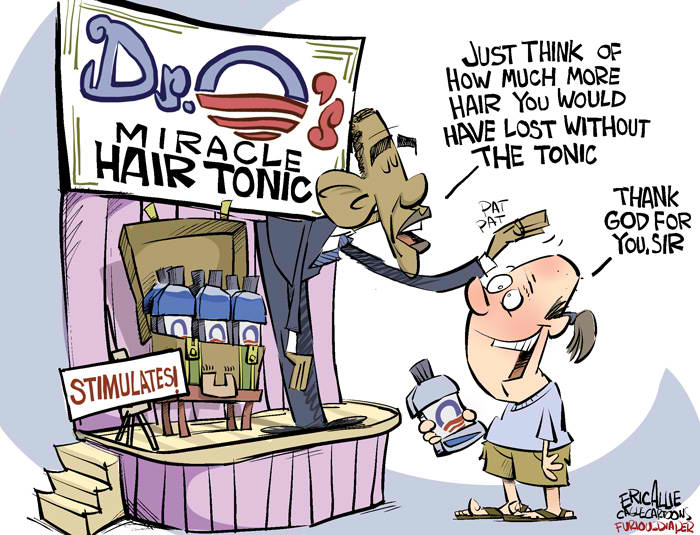
Are you still concerned about money in politics?
Over the past year I’ve seen many well funded candidates go up in flames leading me to question how much money can actually influence an election. Thoughts? ~ O’Dowd
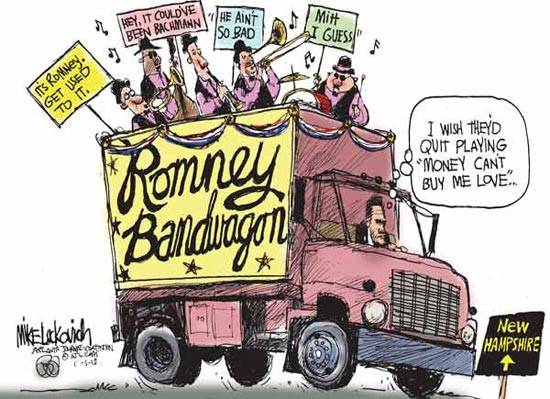
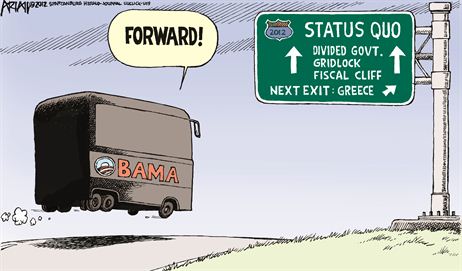
If I were to run for president I wouldn’t pander for votes.
Pandering is for losers. Voters can tell if a candidate is only taking a position for votes–right? Take this last election as an example: President Obama developed the deferred action policy to gain the Hispanic vote and “evolved” his position on gay marriage just to help appease two segments of the electorate that were less than enthusiastic about his performance on the issues that were so important to them. How about Mitt Romney? Did he claim to support policies that were clearly different from his past record in the public eye all while never offering a plausible explanation as to why is position had changed? This may a little more difficult to determine as Romney didn’t have the power to implement new policies during the election like his opponent did, but one could make the argument that it was a little disingenuous to both hate Obamacare and defend his actions on socialized medicine while he was the governor of Massachusetts. Not to mention his public statements about putting coal companies out of business while he was governor–contrasting sharply with his “friend of coal” lovefests while pounding the pavement in Pennsylvania during the heat of the election. One thing is for certain; pandering is an unavoidable evil in politics today as both sides work to gain a few extra votes with demographics that are less than ecstatic about their success at gaining public office.
We all hate pandering and most of us can see through it knowing that a sudden change to a position that we have hoped to see for so long is most likely just a quick fling to take our vote and run—not unlike the flaky friend we had in college that would invite us to a party just so we would bring our cute friend along with us. Even so, we still fall for it sometimes, especially when the new position is exactly what we have been hoping and praying for. Now it’s there, right in front of us—like a mirage in the desert to satisfy our thirst right before we expire from lack of water. In the moment of bliss we forget that four years ago somebody offered us the same thing and then got “so busy” with the economy or the war in Afghanistan, or working on alternative energy issues that he completely forgot to do anything until he needed our vote. Oh well, you think, perhaps it will be different this time and besides, what do I have to lose since the other guy hasn’t even offered to help. You just got pandered!

If I were to run for president I wouldn’t pander. Period. Politicians have to take artificial positions simply because they’ve already made enemies when it wasn’t necessary, or they have poor communication skills to articulate complex views. Obama already had the support of the LGBT community; he didn’t need to come out for gay marriage, especially when he had pandered for the christian black vote four years earlier by standing against homosexual unions. Romney was out of line when he spoke out against coal plants as a governor. He made enemies when it wasn’t necessary and had to backtrack during his campaign by attacking the other guy rather than admitting he was wrong in the past. Nope, I won’t pander. I’ll be man enough to stand on principles that fit my belief system and humble enough to admit when I’m wrong, apologize, and move on. Sure, I might lose a few votes from some groups that don’t particularly benefit from my policies, but at least everyone will know where I stand and I won’t have to pretend to be something I’m not.
Mark it down, put it in your time capsule, chisel it into stone—when O’Dowd runs for president he will tell you the truth, have carefully articulated views on policy for every demographic and issue, and will be willing to admit he’s wrong when he’s boneheaded enough to say something dumb. (Writing in third person: not good!) Here’s the bottom line: pandering is for losers, it’s disingenuous, artificial, and as obvious as a three headed dog. If I run for president I’ll be honest, fair, nice, and modify my position if I realize I was wrong and can articulate why my position has changed. Flip-flop maybe; pander never.
O’Dowd
RE: Why I decided to blog…..
Sometimes we all feel a little out of place when we compare our political views with our peers. Don’t worry you’re not alone: Why I decided to blog…...
The American 2 Party System is for Dummies
Since the dawn of the United States there has been partisan bickering been two primary parties–a trend that has never really changed. This division in politics was likely a remnant of the old British system of rule and the conflict that existed between the Tories and the Whigs in Revolutionary times. Regardless of the history which is no doubt long and tedious, (and way too complex for this blogger) since as far back as the first Congress in 1789 there were two primary parties (see http://en.wikipedia.org/wiki/Party_divisions_of_United_States_Congresses). At that time these parties were the Anti-Administration and Pro-Administration parties (they weren’t all that clever with names back then) which then became the Democratic-Republicans and Federalists in the 4th Congress (1795, remember each Congress takes up 2 calendar years). From there it was the Democrats and National Republicans (1825), Democrats and Whigs (1837), and finally Democrats and Republicans starting in 1855. In fact, since 1855 the seats in the House and Senate have been filled with either a Democrat or a Republican 99.06% of the time and the presidency has never been filled by a third party.
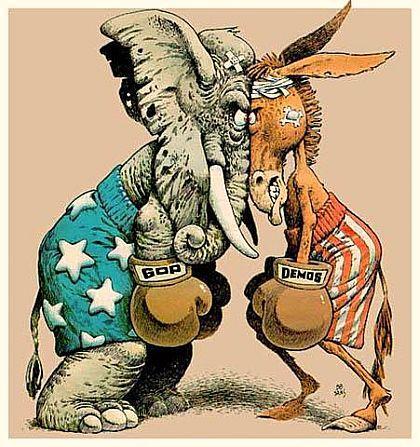
You might wonder why we have two parties but don’t strain your mind–it’s actually not that hard to figure out. The fact is we have two of a lot of things for a very good reason: it’s easier. Think Coke and Pepsi, Apple and Android, Pampers and Huggies; the fact is the human brain likes to make decisions based on comparisons and it’s really hard to evaluate three or more items. I know it sounds simplistic but I think it’s just that easy: Americans are too lazy to do a lot of research so they prefer either/or decisions–Republican or Democrat is way easier than deciding Joe Smith, John Doe, Suzy Salamander, or Willis Winkleman.
My assertion in the title that the two-party system is for dummies is not intended to be an editorial judgement on the merits of our political process–I actually like it that way as it makes it easier to assign responsibility to the group that is messing things up in the country. I just happen to think that the American electorate pays little attention to the individual views and positions of the candidates and we find it easier to make decisions based on a generic title. Like it or not the two-party system is here to stay so if you want to feel represented, make your choice and if you’re not too picky on policy it can be just as easy as a flip of a penny; heads for a Lincoln Republican or tails for . . . the other guys.
O’Dowd
 O'Dowd Politics