100 Years Ago a Bullet Saved the Republican Party
If you follow politics closely, you are aware of the controversy surrounding the current party platform and the dissension in the Republican ranks. Some are contending that the GOP needs to become more inclusive and appeal to minority voters and women while others assert that the party needs to stand strong on the principles of constitutional constructionism, individual responsibility and a smaller centralized government. Disputing over party policy is very normal after losing a major election; most recently we saw a major shift in the Democratic Party where in 2004 John Kerry ran on a platform to vacate the war in Iraq. Upon losing the election, the party became much more moderate and in 2008, Barack Obama demonstrated a very different tone in his views on the subject. Similarly, in 2008 there was much concern about John McCain being too moderate in his views and not attacking the liberal ideas of his Democratic challenger. From that point forward the Tea Party movement became instrumental in redefining the conservative ideal as they swept the mid-term election of 2010, in part as a referendum on the moderate shift in the party.
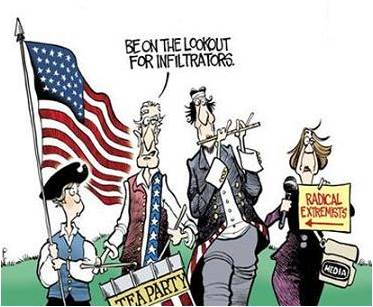
While such wranglings are typical and expected after election loses, the major concern of party leaders is to retain the allegiance of the public and major political personalities. As much as we don’t like it, there is a split in the Republican Party that must be resolved if the GOP is ever to regain control of the White House. Over the past week we have heard a number of commentators including Rush Limbaugh ask why 3 million members of the Republican Party stayed home on election day and many believe it was a due to a disillusionment of the prospects of a Romney presidency which, depending on their position, was either too liberal or too conservative for their tastes. While most of us look at this protest position as unhelpful if not masochistic, the disenfranchisement of Republican voters must be evaluated to avoid a split in the party.
Let’s look back 100 years at another scenario that shows striking parallels to our current situation. In 1912, three years after leaving the presidency as a Republican, Teddy Roosevelt, disenfranchised with the Republican Party, formed the Progressive Party and ran for president. The basis for this division should sound familiar: business vs. regulation, women’s rights vs. status quo, conservation vs. exploitation, and reform in election financing. (I’ll allow you a few seconds to recover your jaw from its current resting place on your keyboard. For more information on the Progressive Party platform please visit Wikipedia Entry). Truth be told, Roosevelt tried to gain the Republican nomination but was outmaneuvered by William Howard Taft and although Roosevelt outpolled Taft in the primaries, the convention was controlled by his opponent resulting in Taft winning the nomination in June. In anger, Roosevelt and a number of other “progressives” formed the new Progressive Party and Roosevelt was named as their candidate in August.
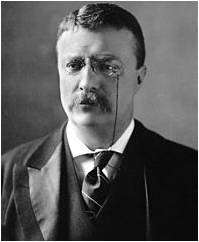
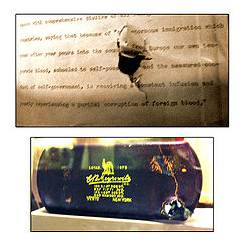
The Republican Party was firmly entrenched however, and the Democrats had a good candidate in Woodrow Wilson. It would be a difficult effort, requiring significant time and energy from the Progressive party, and an energetic, healthy, and articulate figurehead to win the election. Roosevelt fit the bill, gaining a significant advantage over his Republican rival and showing increased momentum going into the month before the election. It appeared that the Republican Party was doomed as their candidate fell further and further in the polls. Roosevelt was gaining but Wilson seemed to be benefiting most from the split in the party. Then the unthinkable happened. On October 14, just three weeks before the election, John Flemmang Schrank, a psychotic saloon keeper, on advice from the ghost of William McKinley (I’m not making this up), shot president Roosevelt in the chest from point-blank range at a campaign stop in Milwaukee. He had been aiming at the president’s head but his shot was deflected by a bystander who was trying to save the candidate’s life. Although he was wounded, Roosevelt still gave his speech, which was largely responsible for his survival, as the 50 page manuscript and his spectacle case absorbed much of the momentum of the bullet. (The projectile remained embedded his chest for the rest of his life. Read the speech here and you will find shocking similarities to our current situation.)
Roosevelt spent much of the next few weeks in the hospital recovering from the wound. His absence from the campaign trail was partly to blame for his eventual loss in the election. When the votes were tallied, Roosevelt had 27% percent of the vote, Wilson 42%, Taft 23%, and 6% to Socialist Party Eugene Debs. The Republican Party was divided and for the first time since the foundation of the modern two party system, a third party candidate outpolled an established party in a presidential election.
While it is hard to see back through the prism of history and consider “what if” scenarios, we know that the Progressive party, though it had some success in the 1914 and 1916 election, eventually sputtered out and many of the Progressives rejoined the Republican Party or became connected with the “New Deal” Democratic Party in the 1930’s. But what if Roosevelt had not been shot and had been able to campaign throughout the battleground states to become president? Would that have spelled the end of the Republican Party? We will never know for sure, but let us consider these actions of 100 years ago as a lesson to all of us Republicans that party bickering and division will not strengthen our position in the world. We must remain strong to our principles of liberty and freedom but there is a time and place for compromise and adjustment to make us better connected with the American public. 100 years ago a bullet saved the Republican Party. Next time we might not be so lucky.
O’Dowd
 O'Dowd Politics